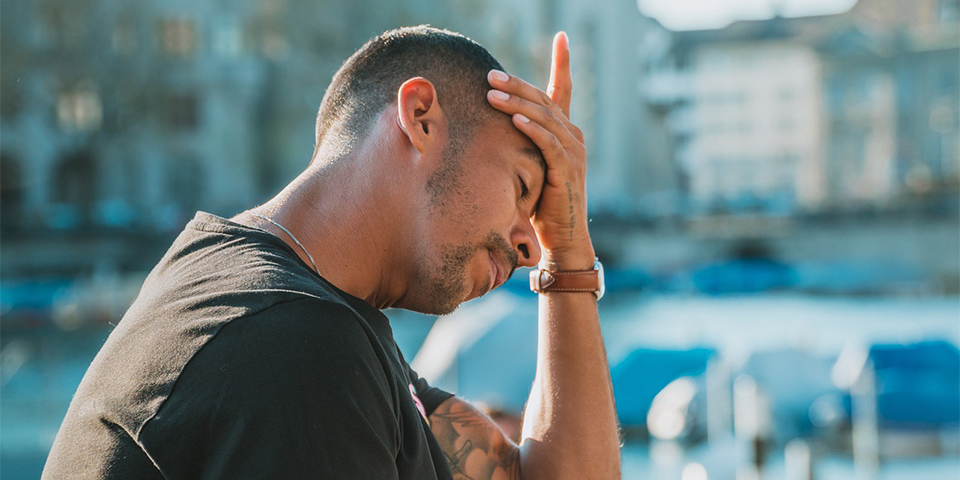
The crisis of male identity
Male identity has historically been shaped by values, responsibilities, and principles that served as a guide in a man’s life. However, in today’s world, where immediacy, overexposure, and external validation dominate, the concept of masculinity is in crisis. The absence of strong role models, combined with the influence of social media, the culture of easy money, hypersexualization, and gender polarization, has led many men to lose their sense of self. In this context, it is necessary to analyze the factors that have contributed to this crisis and explore the possibility of reclaiming an identity based on individual judgment and integrity.
Influencers and social media
In the age of hyperconnectivity, social media has become a mirror where ideals are reflected and distorted. Influencers, with their ability to shape trends and behaviors, have pushed men to pursue ideals without questioning their validity or applicability to real life. In this scenario, individual judgment is sidelined, and what prevails is blind imitation, a cult of superficiality that strips men of their critical thinking. This phenomenon has led to the glorification of unrealistic standards, fostering constant dissatisfaction and a loss of authenticity.
As social media dictates what is desirable or acceptable, men lose their connection with the values that once defined them. The need for external validation replaces introspection and personal growth, leaving a void that cannot be filled with likes or followers. In this void, influencers promote an insidious idea: money as the key to happiness and respect. The image of a successful and fulfilled man is exclusively associated with wealth, creating social pressure that drives many to sacrifice principles and authenticity in pursuit of that ideal.
Money as the sole purpose
The relentless pursuit of money has led men to betray their ideals and ridicule themselves. In a world where success is measured exclusively by the accumulation of wealth, many sacrifice their integrity and authenticity to achieve a status that rarely satisfies. This extreme materialism dehumanizes individuals, reducing their value to numbers and possessions, and setting aside the pursuit of a deeper purpose.
The obsession with money also generates a relentless competition that fuels distrust and alienation. In this endless race, men lose sight of what truly matters: building meaningful relationships, personal growth, and making a positive impact on their surroundings. The pursuit of wealth, promoted as the only path to social validation, not only distorts the perception of success but also opens the door to a new form of slavery: being a prisoner of impulses and commercialized sexuality.
Hypersexualization
Modern men have become slaves to their own sexuality. The rise of platforms like OnlyFans and the growth of the pornography industry are proof of how this subjugation fuels a machine that reduces human relationships to mere transactional exchanges. This phenomenon has given rise to “SIMPS”, men who prioritize sexual and emotional validation from idealized figures, sacrificing their own dignity and well-being. Hypersexualization not only degrades the perception of others but also erodes masculine identity itself, perpetuating cycles of dependence and emotional emptiness.
In this context, sexuality ceases to be a natural expression and becomes a product for consumption. This shift affects interpersonal relationships, reducing them to one-sided and superficial dynamics. Men, trapped in this cycle, lose the opportunity to build genuine connections, reinforcing a sense of isolation. Hypersexualization, therefore, not only enslaves individuals but also erodes the foundations of human relationships. This erosion, combined with identity confusion, fosters unnecessary divisions, such as the false battle between men and women.
The false battle: Men vs. Women
The narrative of a battle between genders has polarized men into two extremes. On one side, there are those who adopt extreme machismo, encouraged by figures like Andrew Tate, who promote a regressive version of masculinity. On the other side, there are men who renounce their own essence in a desperate attempt to please the opposite gender, acting without judgment and perpetuating this fictitious struggle. In both cases, what is lost is the ability to build a personal identity, allowing masculinity to be defined by external and conflicting forces instead of intrinsic values.
Gender polarization not only fragments relationships between men and women but also prevents men from reflecting on their own place in the world. This ongoing conflict distracts from deeper issues, such as personal development and the search for meaning. Instead of moving toward harmonious coexistence, tensions are fueled that reinforce stereotypes and limit the possibility of genuine dialogue. In this context, the solution lies in a higher ideal: the construction of the free man.
The Free Man
The free man is one who transcends the pressures of his time and forges his identity based on his own ideals. This man is not immune to external influences, but he possesses the judgment necessary to filter and adapt them to his reality. He rejects immorality not by imposition, but by conviction. He understands the dynamics of the modern world but does not allow them to dictate his essence.
True freedom lies in the ability to form one’s own judgment, to resist currents that strip him of his humanity, and to build a meaningful life, far from empty ideals. This man also develops a sexuality free from prejudice, based on mutual respect and authenticity, avoiding biases and stereotypes that perpetuate hatred or division. His ability to eliminate these biases allows him to establish healthier and more genuine relationships, where understanding and dialogue prevail.
This man understands that his identity is a constantly evolving process, a synthesis of his values and experiences, leading him to live with integrity and purpose. In this journey toward freedom lies the opportunity to redefine what it means to be a man in the 21st century, laying the foundation for a more just and authentic coexistence.